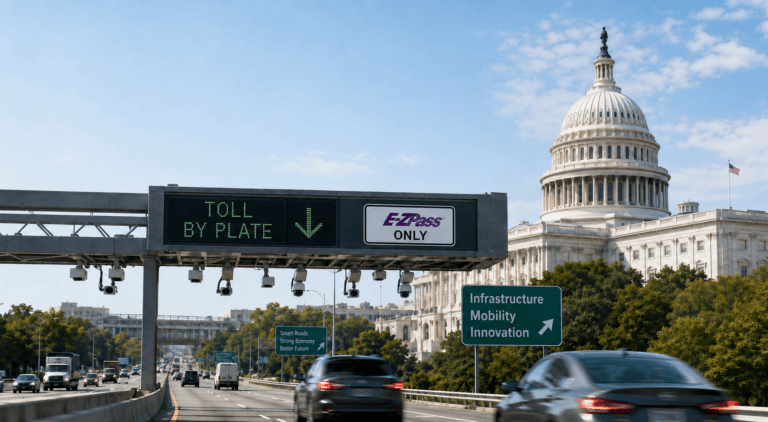
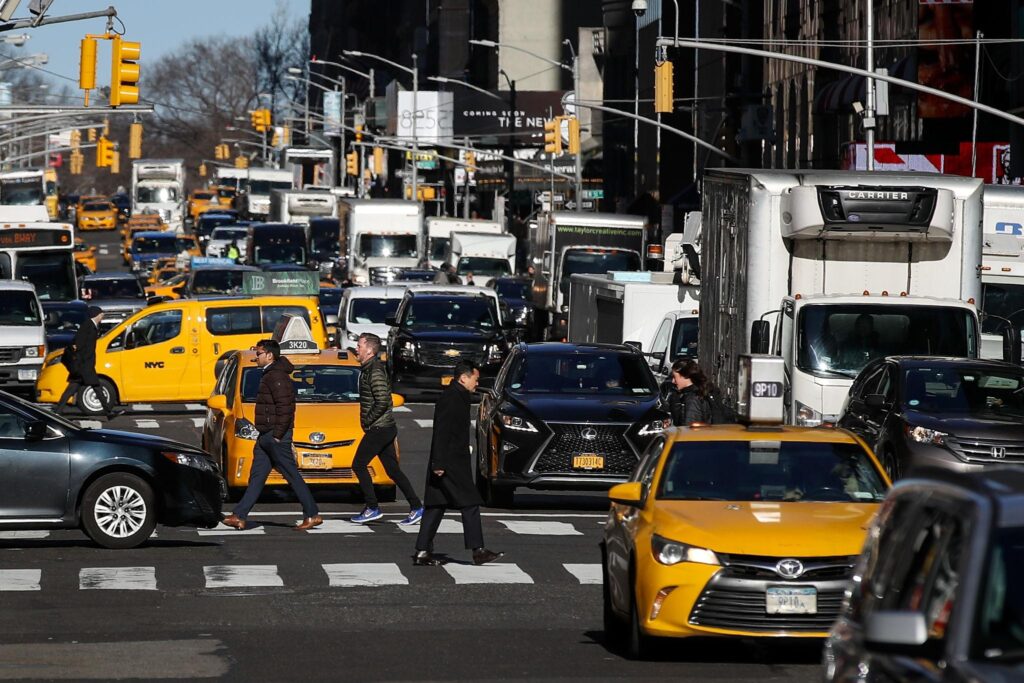
On January 5, 2025, New York City flipped a switch that no American city had ever flipped before. Drivers entering Manhattan below 60th Street started paying a $9 toll. The cameras were on. The meters were running. And every transportation agency from Boston to Los Angeles was watching.
One year later, the numbers are in — and they’re hard to argue with.
27 million fewer vehicles entered Manhattan’s Central Business District in 2025, representing an 11% reduction in traffic. The program generated approximately $550 million in revenue for the MTA — about $50 million more than originally projected. 6sqft For an industry that has spent decades debating whether congestion pricing could actually work in an American city, New York just ran the experiment. Here’s what it taught us.
The Numbers That Changed the Conversation
Before getting into the operational lessons, let’s establish the baseline. Because if you’re going to pitch congestion pricing to a skeptical city council, a nervous transit board, or a room full of commuters who just want to know if this thing actually works — these are the numbers you’re going to need.
Traffic and speed: Vehicle counts in the zone dropped 11%, with 67,000 fewer vehicles entering daily by mid-year. Travel times on river crossings decreased by as much as 42%, and Holland Tunnel rush-hour delays fell 65%. New York Governor Bus speeds inside the Congestion Relief Zone increased by an average of 3.2%, with some routes improving by as much as 25%. New York Governor
Revenue and capital unlock: The MTA’s stated goal was $500 million in net revenue, roughly $42 million per month. The agency came in ahead of target, and the new revenue stream is central to long-term capital plans — including issuing congestion-pricing-backed bonds and eventually borrowing $15 billion to upgrade signals, add elevators, and extend the Second Avenue Subway. Davis Vanguard
Safety: Crashes in the zone declined 7%, with traffic injuries down 8%. The city recorded its fewest traffic deaths in history in 2025 — down 19% from the prior year. 6sqft
Air quality: A Cornell University study published in Nature found a 22% reduction in PM2.5 air pollution concentrations within the congestion relief zone during the first six months of the program. ABC7 New York
Transit ridership: New York subway riders took more than 90 million additional trips in 2025 compared to 2024 — a 7.7% rise, double the increase recorded between 2023 and 2024. amNewYork Subway trips entering the zone were up 9%, express bus trips up 7.8%, and local bus trips up 8.4%. ABC7 New York
Economy: Broadway ticket sales rose 23%, the city saw its best year for office leasing since 2002, and sales tax revenue in New York City grew more than 6% through November — three times faster than neighboring Westchester County and six times faster than Nassau County. NEWS10 ABC
The Fights Nobody Told You Were Still Going On
Here’s where credibility requires nuance. Because the headline numbers are real, but the program didn’t just glide into operation. It survived — barely, repeatedly — and the legal and political battles that nearly killed it haven’t fully ended.
The MTA and New York State successfully fought off repeated legal challenges, and in May 2025, a preliminary injunction was issued in MTA v. Duffy, keeping congestion pricing in effect and blocking the federal government from taking retaliatory measures. New York Governor That case was not symbolic. The Trump administration, through the U.S. Department of Transportation, made an active effort to terminate the program. Governor Hochul stood in Grand Central in early 2026 noting that when Trump declared congestion pricing dead, the cameras stayed on. Spectrum News NY1
There’s also a quieter financial story. One analyst noted a gap between a projected monthly net revenue of approximately $60 million and the $50 million monthly net the MTA was actually reporting Vital City — a discrepancy that points to questions about uncollected revenue, toll evasion, and the transparency of MTA reporting that haven’t been fully resolved. For agencies watching from the sidelines, this matters: the revenue projections you present to your board need to account for real-world collection rates, not modeled ones.
What the Rest of the Country Is Actually Learning
This is the part that matters most for tolling professionals outside New York. Not whether the program “worked” — it did — but how it worked, and what the operational prerequisites were that made it possible.
1. Technology Infrastructure Has to Be Ready Before Politics Are
New York spent years in legal and political limbo, but that time wasn’t wasted on the infrastructure side. For a decade, New York has required GPS devices in taxis and ride-hail vehicles to upload trip coordinates to municipal computers — generating a dataset of hundreds of millions of trip records Wikipedia that made it possible to measure congestion changes with precision from day one. If you’re a city studying this program right now and your vehicle data infrastructure doesn’t exist yet, that’s your first project — not the toll gantry.
2. Enforcement Is a Revenue Story, Not Just a Compliance Story
The gap between projected and actual monthly net revenue is a signal worth paying attention to. The MTA’s tolling technology is multi-modal and camera-based, but collection requires a backend enforcement ecosystem: plate recognition accuracy, out-of-state vehicle compliance, interoperability with DMV databases across jurisdictions, and a process for handling disputes and violations at scale. Any city modeling this program on projected gross revenue without stress-testing collection rates is setting itself up for a credibility problem when actuals come in.
3. Interoperability Matters More Than Anyone Talks About
New York’s program doesn’t exist in isolation. The region includes New Jersey, Connecticut, and multiple transit agencies. Travel time improvements extended beyond the toll zone itself — delays dropped 10% in the Bronx and 14% in parts of Bergen County, New Jersey. New York Governor But the flip side of that regional reach is complexity. For agencies in multi-state metros — Boston, Chicago, the DC corridor — interoperability with neighboring tolling systems, transit networks, and motor vehicle databases isn’t a nice-to-have. It’s foundational.
4. Public Communication Has to Get Ahead of the Fear
The critics’ central prediction — that congestion pricing would hollow out Manhattan’s economy — didn’t happen. Visits to neighborhoods south of 60th Street rose 3.4% in 2025, more than double the 1.4% increase recorded across Manhattan as a whole. Davis Vanguard But the fear was real before launch, and it drove years of political opposition. Only about 140,000 people commute daily by vehicle into the tolling zone ABC7 New York — a much smaller share of the public than the opposition suggested. The agencies that will succeed in rolling out congestion pricing in other cities will be the ones that invest in making that distinction early, loudly, and with local data.
5. The Revenue Story Needs a Concrete Destination
One reason New York’s program survived politically is that the money has a named address: transit capital. The $15 billion in upgrades includes signal modernization, elevator additions, new railcars, and the Second Avenue Subway extension 6sqft — projects that riders have been waiting for for decades. Revenue that goes into a general fund doesn’t build the same coalition. If you’re standing up a congestion pricing program and you don’t have a specific capital commitment attached to the revenue, you’re missing the political architecture that makes the program defensible.
What Boston, Chicago, and LA Are Actually Looking At
All three cities have active studies underway. And if you talk to the planners involved, they’re not just looking at the traffic numbers — they’re looking at the sequence. How did New York build the political will? How did it handle the federal opposition? How did it design the toll structure (peak vs. off-peak pricing, vehicle class differentials, exemptions for low-income drivers)?
The exemption and discount structure is its own operational challenge. New York built in exemptions for certain low-income commuters, Medicaid recipients, and tunnel users who pay bridge tolls. Managing those exemptions at scale — verifying eligibility, preventing fraud, handling appeals — is a backend operation that requires staffing, software, and inter-agency data sharing that most toll agencies aren’t currently built for.
The cities watching New York most carefully aren’t the ones asking “should we do this?” They’ve already answered that. They’re asking: what do we need to build first?
The Honest Assessment
One year in, a fair characterization of New York’s congestion pricing program is: a successful work in progress. Vital City The traffic reductions are real. The revenue is real. The transit ridership growth is real. The air quality improvements are real.
But the federal legal fight isn’t over. The revenue transparency questions haven’t been fully answered. The long-term capital investments that justify the program’s existence — the signal upgrades, the subway extensions — are still years away from completion. The program’s political durability will ultimately be tested not by year-one metrics, but by whether New Yorkers, a decade from now, can point to a faster, more reliable subway and trace it back to those $9 tolls.
For tolling professionals outside New York, the lesson isn’t “launch congestion pricing and the numbers will take care of themselves.” The lesson is that this program worked because years of unglamorous groundwork — technology infrastructure, legal strategy, public education, capital commitment, interagency coordination — came together before the cameras turned on.
The cities that are paying attention to that groundwork right now are the ones that will be ready when it’s their turn.
Toll Talk Podcast covers the business, technology, and policy of tolling and mobility pricing. Subscribe wherever you listen.
Frequently Asked Questions: NYC Congestion Pricing
What exactly is congestion pricing, and how does NYC’s program work?
Congestion pricing is a toll charged to drivers entering a defined high-traffic urban zone, with the goal of reducing gridlock and funding public transit. New York City’s program — the first in the United States — launched on January 5, 2025. It charges most drivers $9 to enter Manhattan south of 60th Street (the Central Business District) during peak hours. Trucks, taxis, and ride-hail vehicles pay different rates, and exemptions exist for low-income drivers, emergency vehicles, and qualifying zone residents.
Did NYC’s congestion pricing hit its revenue targets?
Yes — and then some. The MTA set a target of $500 million in net revenue for the first year. By year-end the program was tracking toward approximately $548–$562 million, exceeding the original goal. That said, one independent analyst flagged a gap between a projected $60 million monthly net and the $50 million monthly net the MTA was reporting, raising questions about real-world collection rates versus modeled projections. For agencies planning similar programs, the lesson is to stress-test revenue assumptions against actual enforcement performance, not just gross toll estimates.
What technology does NYC use to collect the toll, and how does enforcement work?
The program uses an all-electronic tolling system with overhead cameras and license plate readers at zone entry points — no toll booths, no stopping. The backend cross-references plates against registered vehicle accounts and DMV databases, then bills drivers automatically. Enforcement depends on plate recognition accuracy, out-of-state vehicle compliance, and interoperability with motor vehicle databases across multiple jurisdictions including New Jersey and Connecticut. Managing violations, disputes, and exemption verification at scale requires dedicated staffing and software infrastructure that goes well beyond the cameras themselves.
Has congestion pricing actually changed how people get around?
The data says yes. Subway ridership grew 7.7% in the first year — more than 90 million additional trips compared to 2024, double the prior year’s growth rate. Subway trips into the zone were up 9%, express bus trips up 7.8%, and local bus trips up 8.4%. Bus speeds inside the zone increased an average of 3.2%, with some routes improving by as much as 25%. Critics had warned the toll would deter people from commuting to Manhattan altogether, but visits to neighborhoods south of 60th Street rose 3.4% in 2025 — more than double the 1.4% increase seen across Manhattan as a whole.
What operational infrastructure does a city need before launching congestion pricing?
Based on New York’s experience, the prerequisites go much deeper than cameras and gantries. You need a robust vehicle data ecosystem (NYC had a decade of GPS trip data from taxis and ride-hail vehicles before launch), backend enforcement infrastructure for out-of-state plates and exemption verification, interoperability agreements with neighboring jurisdictions, a staffed dispute-resolution process, and a capital commitment story — named projects that tell the public exactly where the money is going. Agencies that skip the groundwork and jump straight to toll technology tend to underperform on revenue and lose public trust early.
What’s the current legal status of the program? Didn’t the federal government try to kill it?
The program has survived multiple legal challenges, but the fight isn’t fully over. The Trump administration’s Department of Transportation made active efforts to terminate the program, and in May 2025 a federal court issued a preliminary injunction in MTA v. Duffy, keeping congestion pricing in effect and blocking federal retaliatory measures. As of early 2026, at least two lawsuits remain pending. For other cities considering congestion pricing, the durability of New York’s program is instructive: a clear statutory revenue pledge tied to named transit projects, and a broad transit-advocacy coalition, were critical to surviving the political attacks.
Where does the $15 billion in transit investment actually go?
The congestion pricing revenue serves as the foundation for $15 billion in MTA capital projects, unlocked through bond financing backed by the toll revenue stream. Named projects include extending the Second Avenue Subway to Harlem, upgrading aging signal systems, adding elevators for accessibility, purchasing new railcars, and expanding bus service citywide. In October 2025, the MTA sold $230 million in bonds to fund the first wave of projects. The bond-backed model matters — it ties the capital program to a legally pledged revenue stream, not just a political promise.
Did air quality and traffic safety actually improve?
Yes, measurably. A Cornell University study published in Nature found a 22% reduction in PM2.5 particulate matter concentrations within the zone during the first six months. Traffic crashes fell 7%, with injuries down 8%. New York City recorded its fewest traffic deaths in history in 2025 — a 19% decline from the prior year. Noise complaints about vehicle traffic in the zone dropped 45%. Fears that trucks would divert through the Bronx and worsen air quality there did not materialize — air quality improved across the broader region.
Which cities are studying congestion pricing next, and how far along are they?
Boston, Chicago, and Los Angeles are the most active, each with feasibility studies underway, though none have reached legislative authorization. The cities watching New York most closely aren’t asking whether to do this — they’ve largely answered that. They’re asking what to build first: data infrastructure, legal frameworks, interoperability agreements with neighboring toll authorities, and political coalitions that can survive the gap between announcement and launch. New York’s experience shows the planning cycle runs roughly six years from legislation to first toll, and the groundwork matters as much as the toll technology itself.