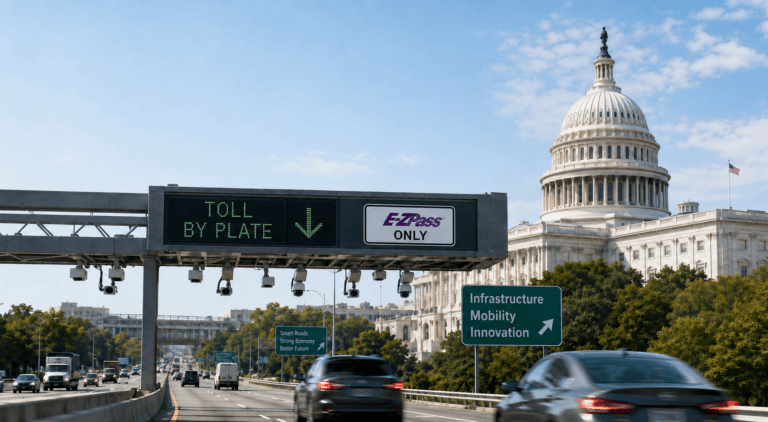
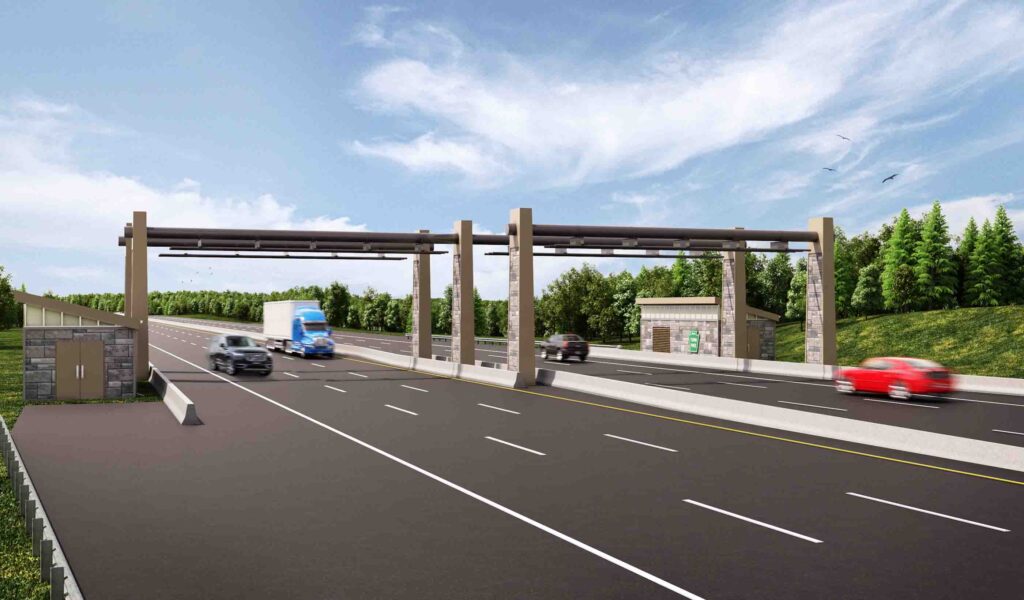
Cashless tolling has quickly become the industry standard—and for good reason.
No stopping. No cash. No congestion.
From the outside, it looks like a seamless upgrade to how we move people and goods. But behind that simplicity lies a much more complex reality—one that agencies, operators, and customers are still navigating.
The Promise of Cashless Tolling
At its core, cashless tolling delivers on a powerful promise:
- Faster travel with no toll booth delays
- Reduced congestion and emissions
- Lower operational costs over time
It’s a clear win for efficiency. And as more regions adopt open-road tolling, the expectation is that the experience should feel just as smooth as the technology behind it.
But that’s where the gap begins.
The Hidden Complexity
Removing toll booths doesn’t remove complexity—it redistributes it.
Instead of a physical transaction, agencies now rely on a combination of technologies and systems working together in real time:
- License plate recognition (LPR) systems
- Transponder-based billing
- Multi-state interoperability
- Back-office processing and account management
And each of these introduces variables.
A slightly obscured license plate.
A rental vehicle with delayed data sharing.
An out-of-state driver unfamiliar with the system.
These small moments create friction—and at scale, they become operational challenges.
Where Trust Can Break Down
For customers, the experience isn’t defined by the technology—it’s defined by the outcome.
If billing isn’t clear or accurate, confusion and frustration follow.
That’s exactly why episodes like “Why Customers Don’t Trust Your Messages (and How to Fix It)” unpack how communication impacts trust and engagement across industries—including tolling.
Similarly, the conversation in “The Road to Better Customer Experience” explores how proactive communication, transparent billing processes, and customer-first strategies are now essential—not optional—for modern agencies.
Even when systems are working as designed, the perception can quickly shift if messaging doesn’t keep pace with expectations.
What Leading Agencies Are Doing Differently
Forward-thinking agencies recognize that cashless tolling isn’t just a technology shift—
it’s a customer experience challenge.
They’re responding by:
Improving communication
Clear, proactive messaging about how tolling works, what to expect, and how to resolve issues.
Enhancing user experience
Simplified billing, better online account management, and more intuitive interfaces.
Investing in accuracy
Advancing LPR technology and integrating systems to reduce errors and delays.
Prioritizing transparency
Helping customers understand not just what they owe—but why.
These aren’t just operational improvements—they’re trust-building strategies.
The Bigger Shift
The move to cashless tolling represents something bigger than infrastructure modernization.
It’s a shift from transaction-based systems to relationship-based systems.
Where success isn’t just measured in collections or throughput—but in:
- Customer confidence
- System reliability
- Long-term public trust
This broader customer-first mindset connects directly to ongoing Toll Talk themes around redefining the tolling experience and putting the driver at the center—like in the episode “From Violation to Innovation: Fixing the Toll Payment Experience.”
Closing Thought
Cashless tolling may remove the toll booth—but it doesn’t remove the responsibility to deliver a clear, consistent, and trustworthy experience.
The agencies that lead in this next phase won’t just be the ones with the best technology.
They’ll be the ones who make it feel simple—even when it isn’t.