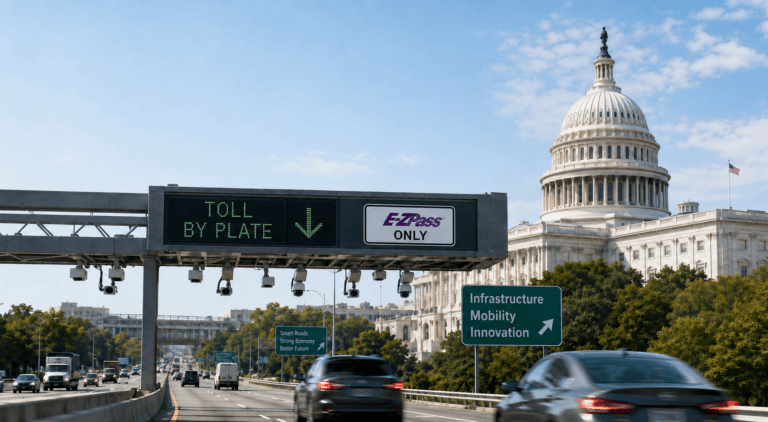
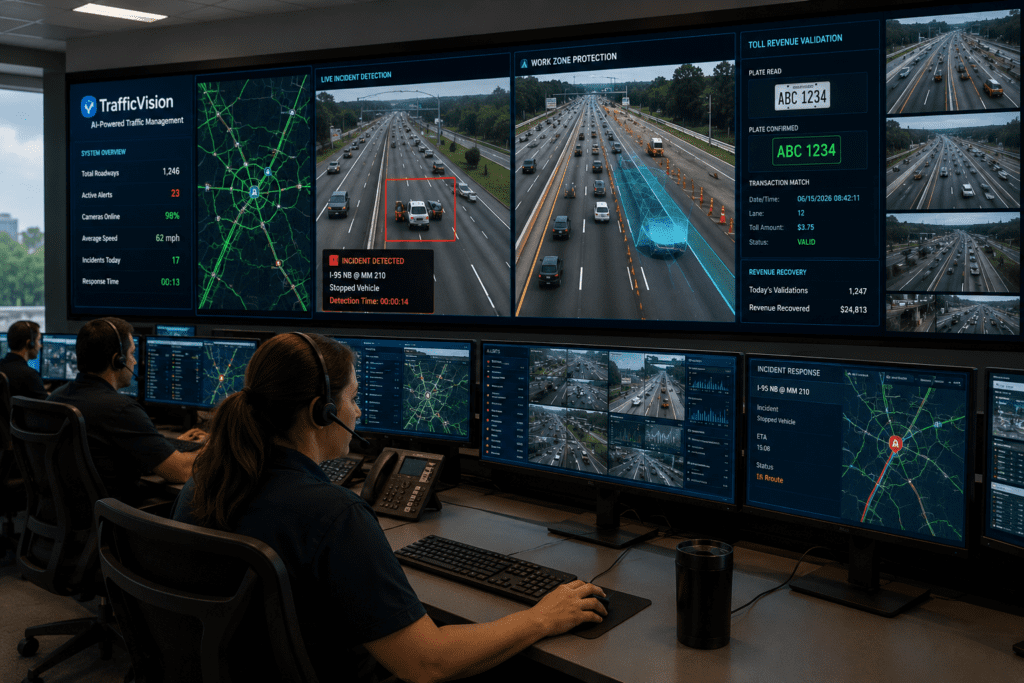
For decades, the standard Traffic Management Center (TMC) looked exactly like a scene out of an aerospace control room: a massive grid of video monitors lining a wall, displaying dozens of live video feeds from closed-circuit television (CCTV) cameras scattered along major toll roads, bridges, and expressways. Seated in front of this overwhelming wall of glass, a small team of human operators strained their eyes for hours, toggling between feeds, hunting for a stalled box truck, a piece of debris in a high-speed travel lane, or a catastrophic collision.
The glaring flaw in this traditional layout wasn’t a lack of operator dedication; it was human biology. Studies in cognitive fatigue have consistently shown that after staring at a grid of changing video feeds for just twenty minutes, a human operator’s ability to spot an active anomaly drops by more than 50%. For generations, TMCs were inherently reactive hubs—learning about an incident only after a motorist dialed 911 or an operator happened to look at the right monitor at the exact right moment.
As we cross the mid-2026 mark, that old, passive operational model is dead.
Driven by rapid advancements in machine learning and the massive processing power of modern edge-computing hardware, Artificial Intelligence has officially transitioned from a futuristic laboratory pilot program into a mission-critical tool running live in TMCs across North America. Intelligent platforms—including cutting-edge systems like TrafficVision—are fundamentally reshaping the highway management industry.
By pairing computer vision analytics side-by-side with human experience, modern tolling organizations are executing a profound digital transformation. AI-driven video analytics are shifting infrastructure management from a slow, reactive scramble to a highly synchronized, proactive discipline—simultaneously safeguarding highway workers and automatically validating millions of dollars in toll revenue.
The Computer Vision Revolution: Moving Beyond Simple Traffic Counting
To fully grasp why AI is revolutionizing the TMC, we must differentiate between legacy video processing and 2026 computer vision engines. Years ago, “smart cameras” were limited to basic background subtraction models. They could perform simple tasks, like counting vehicles passing over a fixed line or estimating average corridor speeds by tracking blobs of pixels moving from point A to point B. If a heavy storm rolled in, shadows shifted, or night fell, those primitive systems suffered from massive false-alarm spikes.
The 2026 AI engines run on highly sophisticated deep learning architectures. These systems do not just see moving shapes; they understand context. Trained on millions of miles of highway video footage across all imaginable weather and lighting environments, the AI performs real-time semantic segmentation and object classification directly at the camera level or within local edge servers.
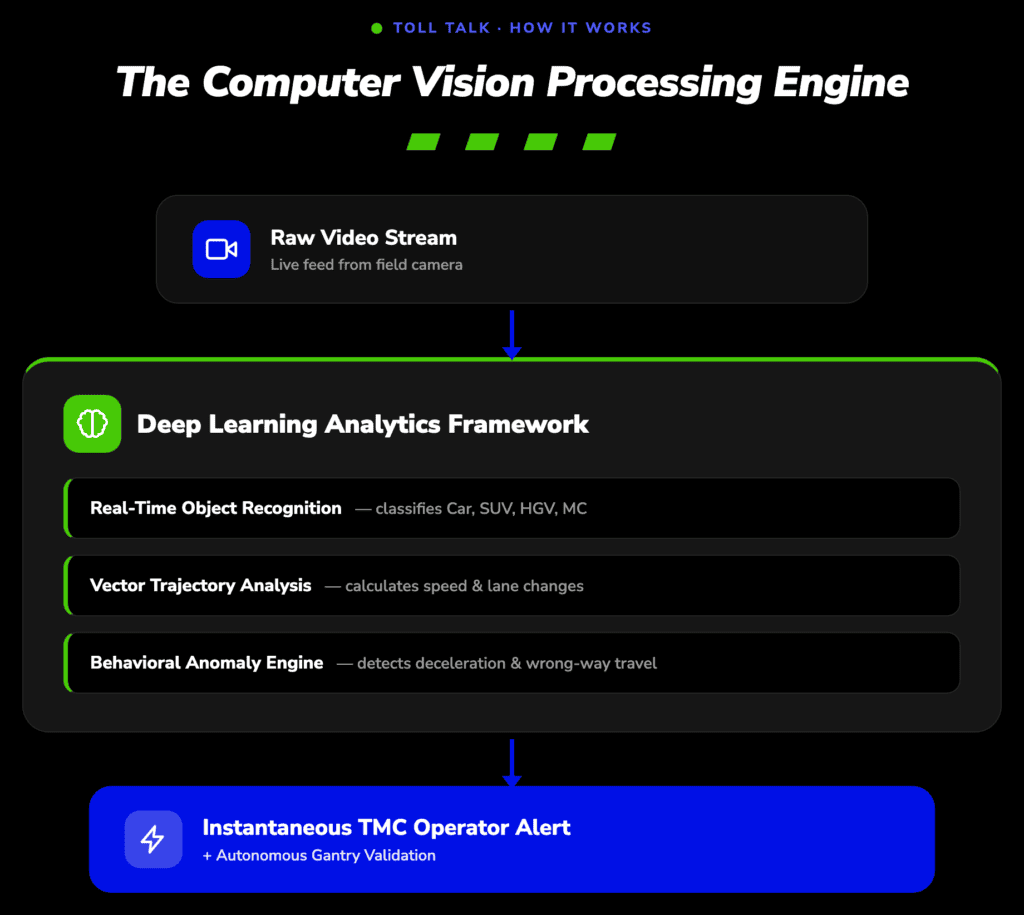
When a live feed passes through the AI layer, the software continuously runs vector trajectory analyses on every object within its field of view. It charts the exact speed, path, and classification of every sedan, commercial truck, and motorcycle.
The moment a vehicle’s behavior departs from verified baseline highway parameters—such as a sudden stop on a high-speed shoulder, a vehicle traveling in the wrong direction, or a pedestrian stepping onto an active right-of-way—the AI doesn’t wait for a human to notice. Within milliseconds, it generates a high-priority alert, drops a red bounding box around the hazard on the operator’s console, and automatically brings the relevant camera view to the center of the main display grid.
Saving Lives on the Roadway: Proactive Incident Detection and Work Zone Protection
The most immediate and profound impact of deploying AI inside the TMC is the drastic reduction in emergency response times. In the world of highway safety, traffic incident management is bounded by the “golden hour”—the critical window where rapid medical or mechanical intervention can mean the difference between a minor delay and a fatal secondary collision.
Crushing Incident Detection Latency
Before AI, the average duration between a vehicle stalling in a live lane and a TMC operator dispatching assistance sat between seven and eleven minutes. With AI video analytics running in the background, that detection latency has been crushed to under 15 seconds.
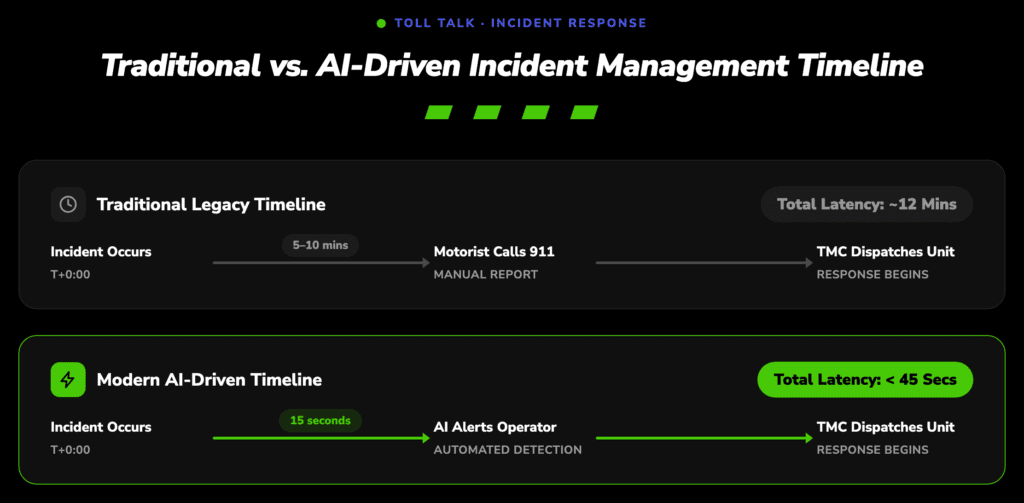
When a car spins out or hits a barrier, the AI recognizes the violent deceleration vector instantly. By alerting operators within seconds, emergency response vehicles, dynamic message signs (DMS), and lane-closure warnings can be deployed before trailing traffic has time to pile into the back of the initial incident. This fast reaction effectively neutralizes secondary crashes, which are historically far more lethal than the initial accident.
Erecting a Digital Shield Over Work Zones
Roadway maintenance crews and emergency responders operate in one of the most hazardous environments in the modern workforce. Despite bright orange barrels, high-visibility vests, and flashing arrow boards, distracted drivers drift into active work zones at terrifying rates.
In 2026, TMCs are using AI video analytics to establish dynamic “digital perimeters” around active maintenance crews and emergency scenes. Cameras mounted upstream from a work zone continually scan approaching traffic trajectories.
If the AI identifies an oncoming vehicle that fails to slow down or change lanes as it approaches the buffer zone—or if its tracking path indicates it is drifting directly toward a maintenance vehicle—the system instantly executes two autonomous safety protocols:
- It sounds a high-decibel acoustic warning alarm directly at the work zone site, giving highway workers vital seconds to jump behind concrete barriers.
- It triggers strobe lights on upstream warning gantries to shock the distracted motorist back into focus.
Validating the Ledger: Automated Revenue Safeguards at Cashless Gantries
While the safety improvements of AI analytics make it an absolute necessity for DOT operations, its intersection with tolling fintech is where the technology delivers an incredible return on investment. For cashless, all-electronic toll networks, revenue validation is an ongoing operational struggle.
An Open Road Tolling (ORT) gantry is a complex environment. On a multi-lane highway with cars passing beneath sensors at 70+ miles per hour, thousands of transactions pass through the system every minute. No matter how finely calibrated an automated system is, hardware anomalies occur:
- Heavy road spray, mud, or snow can obscure a physical license plate.
- A transponder may fail to beep due to a dying battery or incorrect windshield placement.
- Tailgating vehicles can pass beneath sensors so closely that standard equipment struggles to log separate transactional boundaries.
Historically, when these read errors occurred, the transactions fell into a costly loop. The system would generate an “unreadable image” flag, routing the file to a massive manual review queue where human workers sat typing plate numbers by hand. If the human couldn’t decipher the plate, the toll was written off as unbillable leakage.
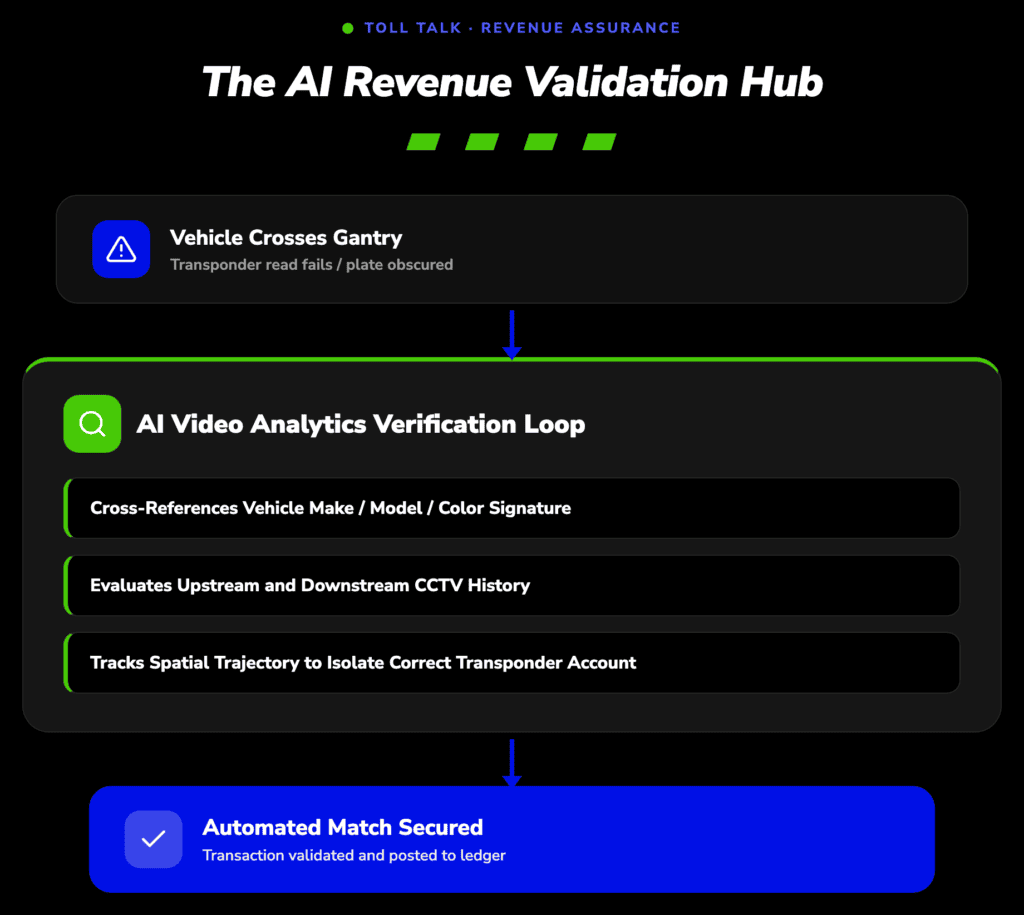
Modern computer vision systems eliminate this manual drag by operating as a secondary, automated audit layer behind the primary billing engine. When a gantry fails to log a clean transponder read or struggles with an obscured plate image, the transaction is instantly analyzed by the AI revenue verification system.
The software runs advanced image restoration algorithms to clean up low-light or weather-degraded video captures. Simultaneously, it maps the vehicle’s specific physical features (make, model, color, axle configuration, and distinct modifications) against historical database signatures.
If a truck with a specific corporate logo and dent pattern passes through a gantry every Tuesday at 8:15 AM, the AI can cross-reference upstream and downstream CCTV views to confidently identify the vehicle and match the missing transaction back to its proper commercial fleet billing account. By automating this visual validation loop, toll authorities have slashed manual back-office processing costs by up to 70% while reclaiming millions in previously unbillable lost revenue.
Navigating the Implementation Matrix: Infrastructure, Edge, and Integration
Deploying a fully automated AI system across a vast regional toll network requires careful technical execution. To make an AI transition viable, infrastructure executives and IT architectures must solve three primary challenges:
1. The Compute Architecture Dilemma: Edge vs. Cloud
Processing high-definition, low-latency video streams from hundreds of highway cameras requires massive computational power. Tolling organizations are faced with a structural architectural choice: do you process the video data in the cloud or directly at the edge?
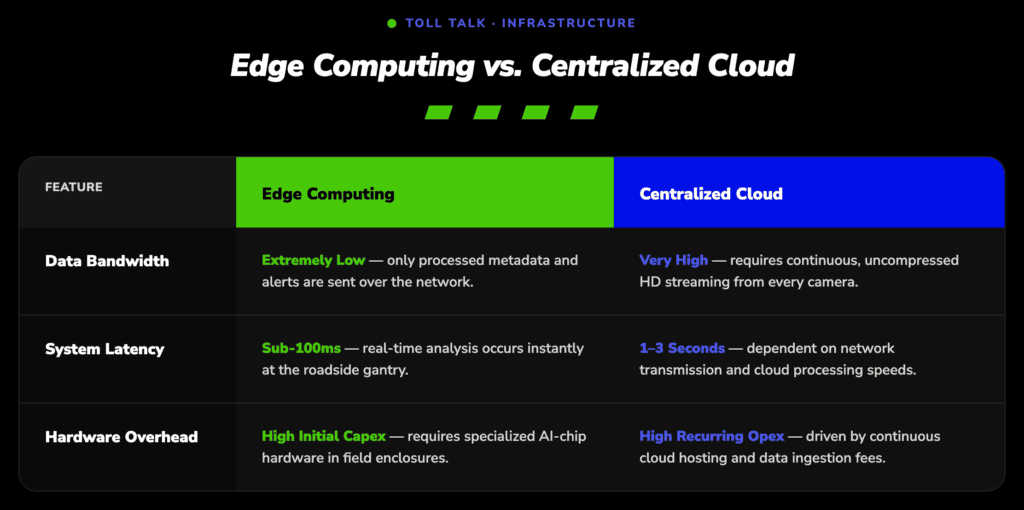
In 2026, the industry is overwhelmingly moving toward a hybrid edge-computing model. Heavy processing chips (like specialized GPUs or Neural Processing Units) are installed inside weatherized field cabinets right next to the physical highway gantries.
This setup allows the AI to process the raw video stream locally with sub-100 millisecond latency—essential for safety-critical tasks like detecting wrong-way drivers. The edge device then discards the empty, unneeded video frames and transmits only the lightweight metadata, transaction confirmations, and high-priority event alerts back to the central TMC, preserving valuable network bandwidth.
2. Overcoming Legacy Video Degradation
The majority of operating toll networks are not brand-new builds; they are patchwork systems featuring legacy cameras, differing compression codecs, and varying video qualities. An AI engine is only as good as the visual data it consumes.
When fed a low-resolution, heavily compressed video stream from an older analog camera, the AI’s accuracy rates can drop significantly, resulting in false alarms or missed incidents. To scale smoothly, modern software frameworks must feature built-in auto-calibration protocols that dynamically normalize incoming video feeds, optimizing brightness, contrast, and scaling profiles before passing the pixels to the core deep learning model.
The Toll Talk Takeaway: Embracing the Proactive Highway Ecosystem
The integration of Artificial Intelligence inside the Traffic Management Center highlights the core theme of modern digital transformation: technology should never replace human expertise; it should supercharge it.
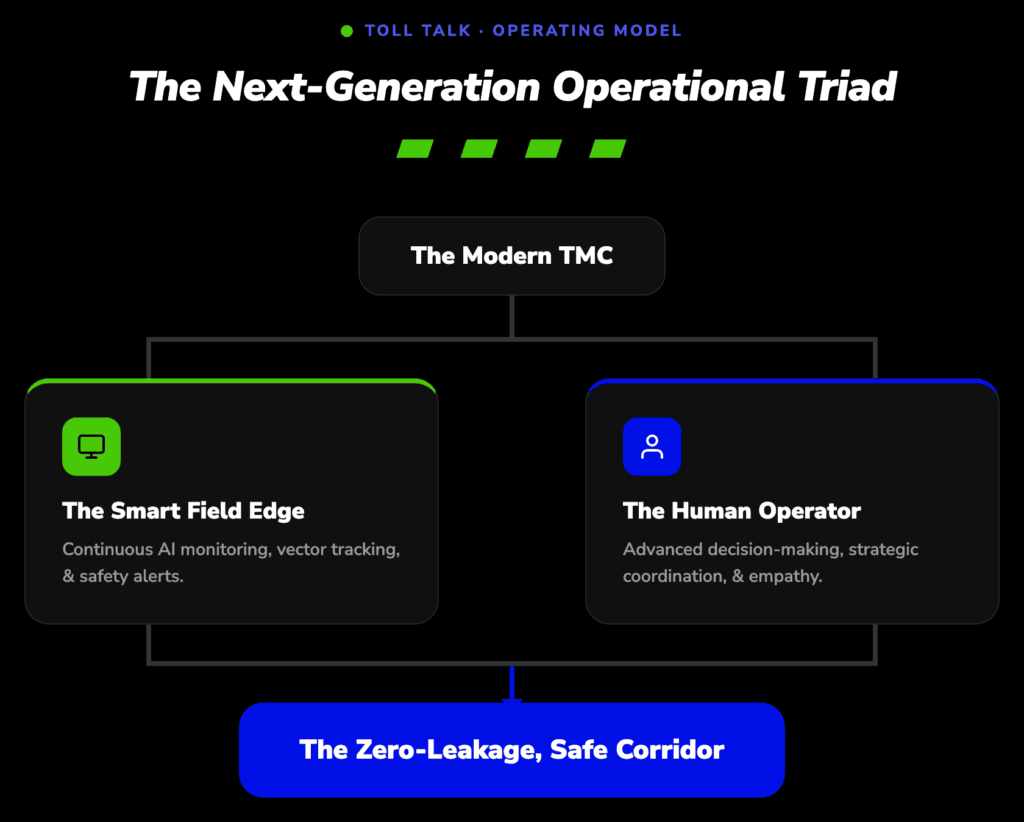
The old model of infrastructure operations—where human workers spent their shifts manually scanning walls of monitors or sorting through piles of unreadable billing images—is completely obsolete. By delegating the repetitive, high-speed tasks of monitoring, tracking, and image validation to specialized AI algorithms, we unlock the true potential of our human workforces.
TMC operators can step away from passive monitoring and focus their energy entirely on high-level strategic coordination, real-time crisis response, and public safety management. Tolling authorities who proactively deploy these dual-purpose AI frameworks aren’t just protecting their bottom lines from revenue leakage; they are actively building a safer, smarter, and more resilient transportation network for the road ahead.