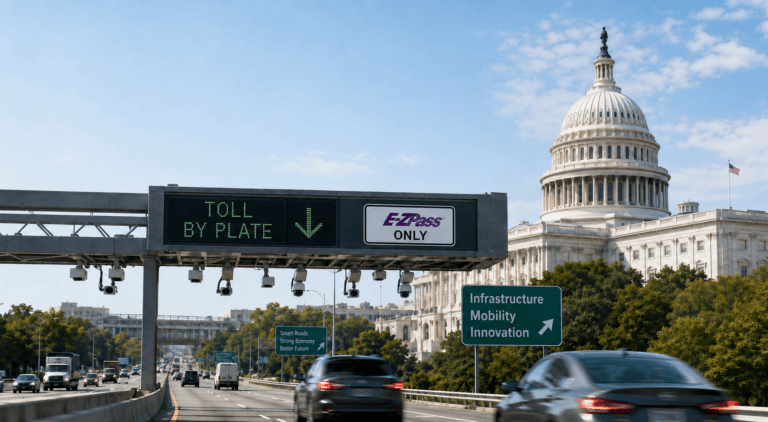

As electric vehicles become more common and fuel efficiency increases, traditional gas taxes are no longer sufficient to fund highway maintenance and toll operations. Toll agencies face a critical funding gap that, if unaddressed, threatens infrastructure quality and operational stability.
In response, agencies are embracing innovative funding models, including Road Usage Charging (RUC), Mileage-Based User Fees (MBUF), and Public-Private Partnerships (P3s). These strategies not only replace lost revenue but also align with emerging urban mobility trends, environmental goals, and technological opportunities.
This post explores how toll agencies can implement these funding strategies, the benefits and challenges of each, and real-world examples from the U.S. and abroad.
The Decline of Fuel Tax Revenue
Fuel taxes were historically the backbone of road funding. However, multiple factors are eroding this revenue source:
- Electric Vehicle Adoption: EVs contribute no fuel tax revenue, yet they use the roads equally.
- Improved Fuel Efficiency: Modern vehicles consume less fuel per mile, reducing per-vehicle tax contributions.
- Inflation Impact: Static tax rates lose purchasing power over time.
Agencies relying solely on gas taxes risk underfunded maintenance, delayed projects, and service quality issues. A diversified revenue model is no longer optional—it is essential.
Road Usage Charging (RUC) and Mileage-Based User Fees (MBUF)
RUC charges drivers based on distance traveled, rather than fuel consumed. This approach ensures equitable contributions from all road users, including EVs.
Benefits of RUC
- Revenue Stability: Mileage-based fees provide a predictable funding stream.
- EV Neutrality: All vehicles contribute proportionally to road use.
- Behavioral Incentives: Agencies can design pricing to reduce congestion or encourage off-peak travel.
Implementation Considerations
- Privacy Protection: Use odometer reporting or GPS tracking with strict data security standards.
- Equity Measures: Adjust rates for rural drivers, low-income households, or essential travel.
- Administrative Costs: Develop efficient billing and enforcement systems to keep overhead low.
Case Study: Oregon’s OReGO Program
Oregon’s statewide RUC pilot program charges drivers per mile driven instead of fuel taxes. Early results show high acceptance rates, particularly among EV owners, and provide a blueprint for other states.
Public-Private Partnerships (P3s)
P3s allow toll agencies to share risk, capital, and operational responsibilities with private entities.
Advantages
- Accelerates infrastructure delivery
- Reduces upfront public debt
- Shares operational risk with experienced partners
Potential Challenges
- Negotiation complexity
- Profit-sharing reduces net revenue
- Need for long-term performance monitoring
Case Study: I-595 Express Lanes, Florida
Florida’s I-595 corridor expanded express lanes through a P3, enabling fast project completion while maintaining operational oversight. Users benefit from faster travel times, while the state reduces financial exposure.
Dynamic Tolling: A Complementary Tool
Dynamic tolling adjusts rates based on real-time demand and traffic conditions. Benefits include:
- Smoother traffic flow
- Optimized revenue collection
- Reduced congestion-related maintenance costs
When combined with RUC or P3 strategies, dynamic pricing maximizes both funding and operational efficiency.
International Approaches
Several countries provide examples of innovative toll funding strategies:
- Singapore: Uses dynamic congestion pricing, including low-emission vehicle incentives.
- Sweden: Congestion charges in Stockholm fund public transit and reduce downtown traffic.
- Germany: Distance-based tolls for heavy vehicles ensure fair road usage contributions.
Learning from these international examples helps U.S. agencies adapt best practices for local conditions.
Actionable Steps for Toll Agencies
- Evaluate Funding Gaps: Assess lost revenue from fuel taxes and EV adoption.
- Pilot RUC Programs: Start small to test technology and user acceptance.
- Explore P3 Opportunities: Identify projects suitable for risk-sharing partnerships.
- Integrate Dynamic Tolling: Align toll pricing with traffic patterns and revenue goals.
- Communicate with the Public: Transparency is key for adoption and compliance.