The Headline Number Has a Source — and It’s Damning
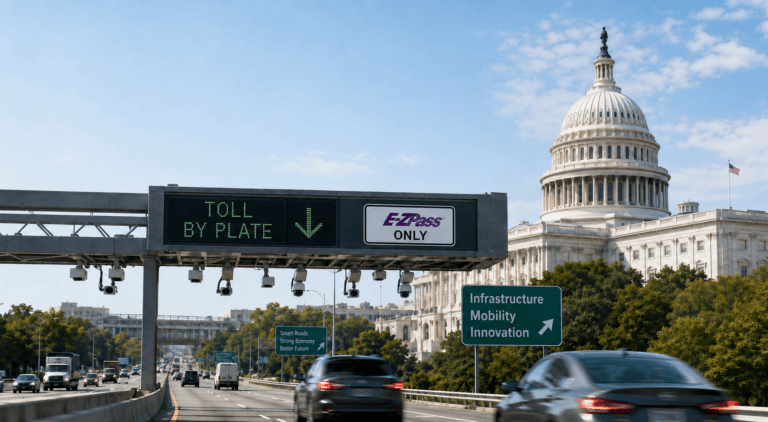
Start with what we know for certain. Of $20.24 billion in revenue owed to US toll authorities each year, about $2.24 billion goes uncollected due to ineffective account conversion processes and paper-based invoicing. Deloitte The figure comes from Deloitte’s analysis of the all-electronic tolling transition, and it traces the failure directly to process breakdown — not to deliberate evasion. The infrastructure works. The payment experience doesn’t.
That distinction matters enormously for how agencies respond. For years, the industry framed uncollected tolls as an enforcement problem — a population of bad-faith drivers gaming the system. The enforcement playbook followed: heavier fines, registration holds, court referrals. Pennsylvania Turnpike CEO Mark Compton recently announced civil lawsuits filed through the state attorney general’s office against the agency’s most egregious non-payers. Some of that is necessary. But enforcement alone cannot address a crisis that is, at its root, structural.
“Drivers aren’t trying to avoid payment. They’re blocked by systems that are hard to use. Our research shows friction, not intent, is the real barrier.” — Anne Hay, CMO & EVP, PayNearMe
What 1,548 Drivers Actually Said
In February 2025, PayNearMe surveyed 1,548 US drivers aged 18 and up — one of the most detailed public datasets on toll payment behavior ever published. The research captures key reasons drivers don’t pay their tolls and identifies how reducing payment friction and offering more convenient payment options can help toll agencies reclaim lost revenue. PayNearMe
The findings are worth sitting with:
In the past year, nearly 1 in 4 drivers (23%) admit to delaying, forgetting, or avoiding a toll invoice payment that later became a violation. Once invoices became past-due violations, a staggering 73% of drivers delayed payment. PayNearMe
Thirty-nine percent of drivers report difficulty accessing toll websites or payment portals. PayNearMe Nearly 1 in 3 drivers (32%) said they didn’t receive invoices in a timely manner — a delay that increases the likelihood of missed payments and violations. PayNearMe
When asked what would have helped them avoid receiving a past-due toll violation, 49% of respondents said “an easier payment process that isn’t long or complicated.” PayNearMe
That last number is the kicker. Nearly half of drivers who received violations were willing to pay — and didn’t because the process stopped them. This is not a compliance problem. It is a product problem.
The payment method gap is equally telling. About 28% of respondents said their desired payment method was unavailable, while 30% of respondents missed payments because paying by digital wallet was not an option. Digital Transactions Drivers would prefer to pay road tolls with digital tools like PayPal (55%), Apple Pay (50%), Venmo (33%), Google Pay (32%), and Cash App (30%). Payments Dive These are not exotic preferences — they are the default payment behaviors of a large share of the American driving public.
Mapping Where the Money Dies
Revenue leakage isn’t a single failure — it’s a cascade. Research shows that almost 40% of revenue that passes through the toll-by-plate process remains uncollected by tolling authorities. Deloitte Here’s how the breakdown unfolds at each stage of the pipeline:
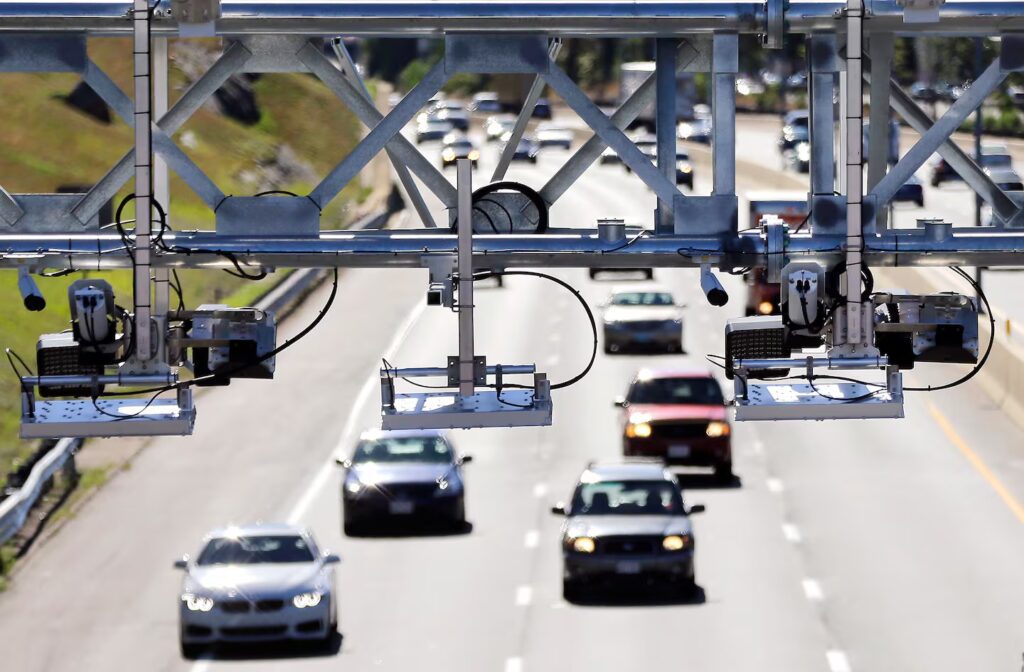
Stage 1 — The camera can’t read the plate. Obscured, damaged, missing (in single-plate states), or grease-covered plates never generate an invoice. Toll evaders around the country have been creative, using grease to obscure plate numbers and installing devices that deploy to cover up plates when drivers go past plate cameras. Weather conditions and camera malfunctions can also make plates impossible to read. CBS News
Stage 2 — The DMV lookup fails. Revenue leakage can result from faulty equipment, failure of the camera systems to capture a plate number properly, or an inability to pursue out-of-state drivers. CBS News Out-of-state plates are a particular problem — states won’t allow each other’s violators to be prosecuted because each state has different penalties for toll avoidance.
Stage 3 — The paper invoice arrives late or not at all. Those without transponders have their licence plates photographed and receive invoices in the mail. Traffic flows smoothly, but that’s where the payment problems begin. ITS International For younger drivers who rarely check physical mail and frequently move, this is often a fatal gap.
Stage 4 — The portal turns the driver away. Nearly 40% of revenue that passes through the toll-by-plate process goes uncollected. While this might look like widespread evasion, most drivers who miss payments aren’t refusing to pay — they’re encountering barriers that make payment difficult. ITS International
Stage 5 — The violation multiplies the cost. On average, a customer service call can cost up to $8.01 and take roughly 8 minutes to resolve, while a self-service interaction costs as little as $0.10. PayNearMe When 63% of drivers who receive violations call support or dispute the charge, agencies are spending more to chase the money than many violations are worth.
Each stage compounds the next. The $2.24 billion figure is the aggregate of all these failures running in parallel, across every agency, every year.
Pennsylvania: The Case Study in Plain Sight
Most toll agencies don’t publish granular audit data. Pennsylvania does — which makes the Turnpike the industry’s most uncomfortable mirror.
The agency collected $1.84 billion for the year ending in September with another $237 million uncollectable after 150 days, about 7.8% of total revenue. Pittsburgh Union Progress That figure has deteriorated sharply: leakage has more than doubled from 2021, when it stood at $105 million. Pittsburgh Union Progress
Agency CEO Compton has been candid about why: the percentage of motorists who don’t pay their tolls remains fairly steady and about the industry average, but the unpaid amount increases because the amount of each unpaid toll is higher every year Pittsburgh Union Progress after 17 consecutive annual rate increases. The math is punishing — the same non-payment rate applied to a higher base toll produces a larger dollar shortfall automatically.
Pennsylvania’s situation is compounded by a structural plate-reading disadvantage. Pennsylvania is unusual because it performs detailed audits and releases them publicly. It is one of the states that does not require front license plates, which immediately makes reliable vehicle identification harder. Inex Technologies
Over the past year, the Turnpike has referred more than 100 of the most egregious cases of toll avoidance to the Attorney General’s Civil Division for collection enforcement. The agency collected $6.5 million from past due bills in the first quarter of the current fiscal year, compared to $2.4 million the previous year. Pittsburgh Union Progress That’s real progress on the worst-offender tail. It is not, however, a solution to a $237 million structural problem.
The Out-of-State Problem Nobody Has Solved
It’s worth pausing on the enforcement ceiling, because it explains why friction reduction is not just a convenience play — it’s the primary lever agencies actually control.
Not surprisingly, motorists from Ohio (8.3%), New Jersey (7.3%), West Virginia (2.5%) and New York (2.4%) are among the most active on the Pennsylvania Turnpike. However, if they choose not to pay tolls, there is little the turnpike can do to collect from them. States won’t allow each other’s violators to be prosecuted in another state because each state has different penalties for toll avoidance. Pittsburgh Union Progress
Compton has been working toward interstate reciprocity agreements for over a decade. Progress has been minimal. That means a meaningful portion of leakage is, under current legal structures, essentially unrecoverable through enforcement — and the only way to collect it is to make payment easy enough that drivers choose to pay before a violation ever forms.
The Solutions: What Actually Works
The good news — and there is genuine good news here — is that agencies willing to modernize their payment infrastructure are seeing measurable results. The interventions that work share a common logic: meet drivers where their payment behavior already lives, and eliminate every unnecessary step between “I owe this” and “I paid this.”
QR Scan-to-Pay on Paper Invoices
The study shows strong interest in scan-to-pay QR codes, with 45% of drivers finding them appealing. One toll agency using PayNearMe’s Smart Link with QR codes saw a 640% increase in on-time payments. PayNearMe The mechanism is simple: a QR code on a mailed invoice links to a mobile-optimized payment page with invoice data pre-filled. No login. No account creation. No manual URL entry. Scan and pay in under a minute. For infrequent toll road users, this method removes multiple steps from the payment journey: no logging in, no remembering an account number, no need to type in a long web address. PayNearMe
Digital Wallet Acceptance
Digital wallets like Apple Pay, Google Pay, PayPal, and Venmo have become staples of modern commerce, yet toll agencies have been slow to offer them. Payments Dive The research shows that 39% of drivers believe they could have avoided past-due violations if toll agencies accepted digital wallet payments. And 32% say it’s difficult to fund their toll account specifically because these apps are not supported. PayNearMe Among respondents, 51% of consumers store funds directly in payment apps, effectively using them as alternative bank accounts. Payments Dive When an agency doesn’t accept those apps, it is declining money the driver is ready to hand over.
Unified Platform Replacing Fragmented Vendor Systems
When agencies stitch together multiple payment processors, online portals, notification systems, and data vendors, the customer journey becomes disjointed. One vendor powers texts, another handles cards, another runs IVR, and none of them share UX standards. This creates friction that can cost millions in leakage. PayNearMe The consolidation trend is accelerating — agencies that replace five to eight disconnected vendor systems with a single payment experience platform report meaningful improvements in both collection rates and operational costs.
Cash at Retail for Underbanked Drivers
Among cash payers, 17% don’t have bank accounts and 12% lack a credit or debit card. Yahoo Finance For this population, neither portal payments nor digital wallets are viable. Cash-at-retail networks — where drivers pay toll invoices at convenience stores and pharmacy chains — close this equity gap and capture a segment of non-payments that no amount of UX improvement on a web portal would reach.
The Bigger Picture: A System Designed for a Different Era
All-electronic tolling brought infrastructure into the 21st century, but the payment experience hasn’t caught up. The cost of that gap — $2.24 billion in annual uncollected revenue — isn’t inevitable. ITS International
The agencies that are closing the gap share a mindset shift: they’ve stopped treating payment collection as a back-office compliance function and started treating it as a customer experience problem. Those are very different design briefs. A compliance-first brief produces fine escalation ladders and license plate suspension programs. A customer experience brief produces QR codes, digital wallets, and pre-filled payment flows that convert before a violation ever issues.
The tolling market is recognizing a pattern long seen in consumer finance, insurance, and government payments: consolidation improves both efficiency and customer experience. PayNearMe Agencies that modernize their payment infrastructure aren’t just reducing leakage — they’re reducing the downstream costs of violation management, customer service calls, and enforcement proceedings that currently eat into recovered revenue before it ever reaches operations or infrastructure budgets.
The $2.24 billion problem isn’t going away on its own. Pennsylvania’s numbers make clear it will get worse as toll rates rise, as traffic volumes grow, and as the gap between modern consumer payment expectations and legacy agency infrastructure widens. The agencies that start closing that gap now — with QR codes, with digital wallets, with unified platforms — are the ones that will look smart in five years.
The rest will be writing bigger enforcement contracts and wondering why the leakage keeps growing.
Sources
- Deloitte — Tolling Solutions to Stop Revenue Leakage — deloitte.com
- Pittsburgh Union Progress — Pa. Turnpike adds civil suits to help collect $237 million in unpaid tolls (November 2025) — unionprogress.com
- PayNearMe — The Impact of Payment Experience on Toll Revenue Leakage (February 2025 survey, n=1,548) — home.paynearme.com
- iNex Technologies — Why Toll Roads Go Unpaid: Inside Toll Evasion and Revenue Leakage in the US (January 2026) — inextechnologies.com
- ITS International — Tolling works — now the payment experience needs to catch up — itsinternational.com
- Digital Transactions — Friction Hobbles Toll Payments, a Study Finds (June 2025) — digitaltransactions.net
- PayNearMe — 3 Payment Innovations That Improve Toll Collections — home.paynearme.com
- PayNearMe — 3 Tolling Payment Trends to Watch in 2026 — home.paynearme.com
- CBS Pittsburgh / AP — Report Shows More Than $104M in Uncollected Pa. Turnpike Tolls (2021) — cbsnews.com